How to Build an Outline That Makes a Book Easier to Finish
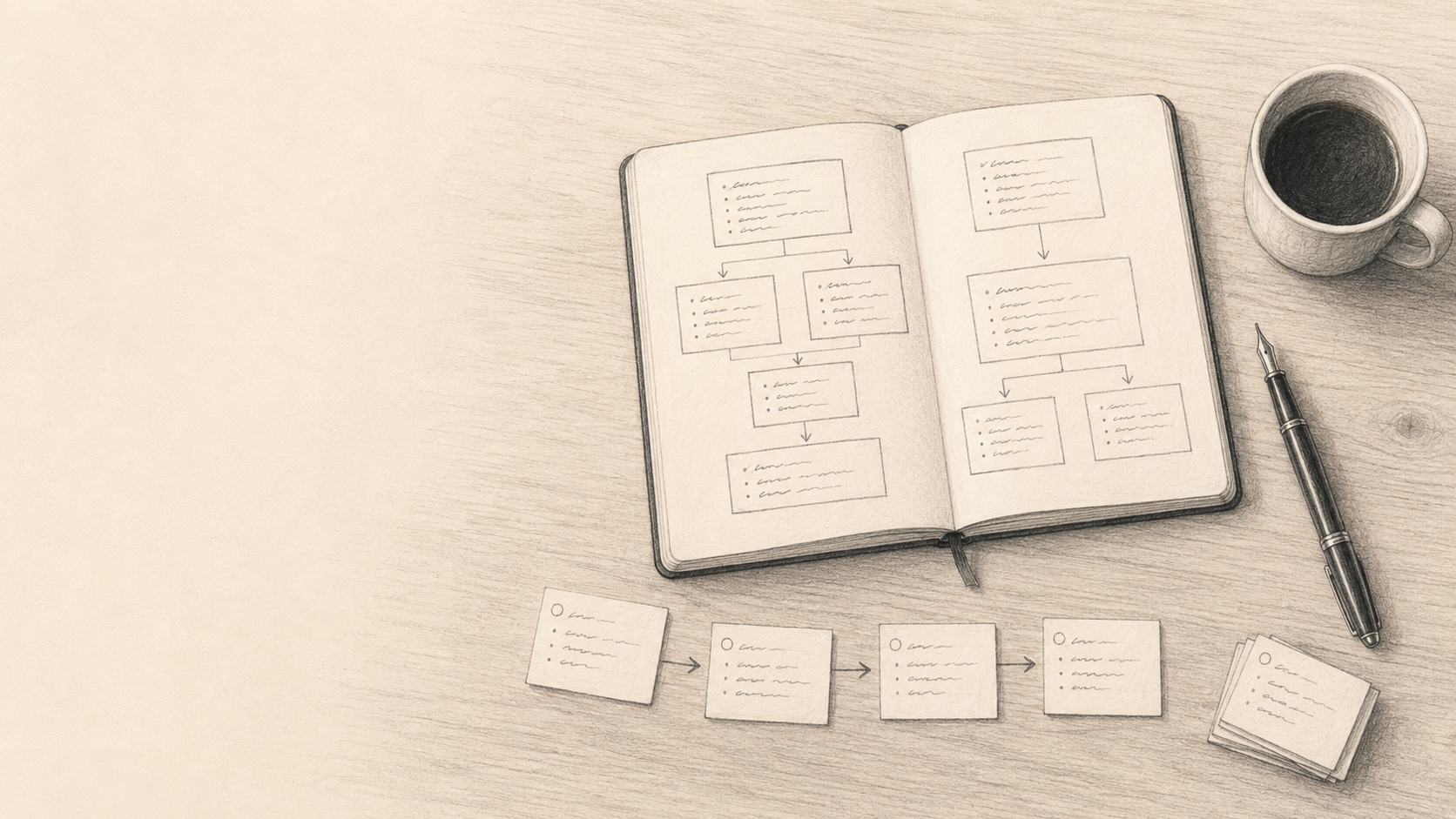
An outline is not a cage for your book. It is a working map. It gives you enough direction to keep moving when the excitement of a new idea gives way to the ordinary work of finishing a manuscript.
Some writers avoid outlining because they are afraid it will make the book stiff or predictable. Others create such a detailed plan that they feel they have already written the book before the first page exists. Neither extreme is necessary. A useful outline is simply a clear answer to one question: what needs to happen next?
Start with the promise of the book
Before listing chapters, write down what the reader should gain by reaching the final page. For a nonfiction book, that may be a skill, a clearer understanding, a plan of action, or the confidence to handle a difficult situation. For a novel, it may be a completed emotional journey, a mystery resolved, or a character changed by what they have endured.
Keep the promise short. If you cannot explain the book in two or three sentences, the outline will probably wander. A good working statement might be: “This book helps first-time authors turn a book idea into a manuscript they can revise and publish.” Every chapter should contribute to that outcome.
Choose the natural order
Most nonfiction books become easier to outline when they follow the reader’s real journey. Begin with the situation or problem that brought the reader to the book. Then move through the knowledge, decisions, and actions that help them make progress. Do not bury the most important practical help beneath too much background.
A simple nonfiction outline might look like this:
-
Understand the problem.
-
Prepare for the work.
-
Take the first practical steps.
-
Handle the complications.
-
Build a plan for what comes next.
Fiction needs a different kind of order, but the same principle applies. The reader needs a meaningful beginning, growing pressure, a point where the character cannot return to the old life, a decisive confrontation, and a consequence. You do not need every scene before you begin. You do need to know why the story is moving forward.
Build a chapter list before you build pages
Write a plain list of possible chapter titles. They can be rough, boring, or temporary. At this point, you are looking for the spine of the book, not the finished table of contents.
Under each title, add three brief notes:
-
What must this chapter accomplish?
-
What does the reader need to understand, feel, or do by its end?
-
What examples, scenes, research, or practical material belong here?
If you cannot answer those questions, the chapter may be too vague. If two chapters have nearly the same answer, combine them. A clean outline is not the one with the most chapters. It is the one where each chapter has a distinct job.
Leave room for discovery
An outline should make surprises easier to use, not prevent them. While drafting, you will remember an important story, find a better example, or discover that a character would make a different choice than you first planned. Keep a “later” list for these ideas. Then decide whether the new material strengthens the book’s promise or merely distracts from it.
This is especially important for writers who collect more ideas than they can possibly use. Do not throw good material away. Move it to a future-article, future-book, or bonus-material file. A parked idea is not a lost idea.
Make the outline visible while you write
You should be able to look at your outline and immediately find your next section. A simple document, index cards, a notebook, or a project-planning tool can work. Writers who like keeping research, chapters, notes, and rearrangeable sections in one place may find Scrivener helpful, but the best system is the one you will use consistently.
Do not wait for an outline to look perfect. The outline will change as you learn what the book needs. That is not failure. It means the project is becoming more honest and more complete.
Use the outline to protect your writing time
When writers sit down without knowing what comes next, they often spend the first half hour rereading old pages or wondering where to begin. An outline removes that friction. You can open the current chapter, read its three notes, and write the next scene, example, or explanation.
That kind of momentum is what finishes books. The outline does not replace imagination, voice, or discipline. It gives all three somewhere useful to go.
If you have not yet settled on the book’s central promise, begin with How to Write a Book: A Practical Plan for First-Time Authors. Once the outline is in place, your job is simpler: write the next honest, useful page.